
Introduction
In conventional rotating systems, rotating equipment moves water, oil, gas, and other materials. It uses soft or fixed tubes for this transfer. Nonetheless, the soft tubes are easily tangled, twisted, and worn. Worse, long-term rotation leads to tube leakage. So, it is necessary to constrain rotating angles or perform regular shutdowns to maintain operation. In this way, conventional operating patterns lower the production efficiency and increase the costs. Fortunately, with the advent of rotary unions, these problems can be addressed easily. Rotary union shafts and housing ensure continuous fluid transmission between the stationary pipelines and rotary equipment. This eliminates the costs of connecting tubes and regular shutdowns. It greatly improves production efficiency while reducing costs.
What Is a Rotary Union?
Description of a Rotary Union
A rotary union is a device that moves fluids between fixed tubes and rotating equipment. With its unique structure, it permits water, hydraulic oil, gas, steam, and other media to be transmitted during rotation. At the same time, its inner sealing structure effectively reduces media leakage. So, a rotary union greatly improves production efficiency.
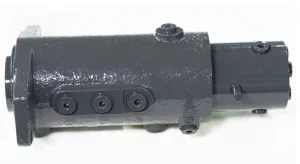
Main Components of a Rotary Union
1. Housing
The housing is used to fix, support, and protect the inner components. It connects the stationary pipelines with the fixed component of the rotating equipment. The housing does not rotate with the equipment.
2. Shaft
The shaft is a key part of the rotary union. It connects to the rotating equipment and turns with it. The fluid flows into the rotary joint from the fixed pipeline. Next, it goes through the internal fluid channel into the shaft. Then, it moves to the rotating equipment.
3. Seal assembly
The fluid must not leak while the shaft is rotating. So, a seal assembly is installed between the stationary and rotating components. With sealing faces or sealing rings, it can minimize the leakage of water, oil, gas, or vapor while the shaft continues rotating.
4. Bearing
The shaft requires stability under high-speed rotation. Without a proper bearing, the shaft can wobble. This leads to more friction and other issues. The bearing supports shafts, reduces friction, maintains shaft coaxiality, and improves rotational stability.
5. Fluid Passage
Fluid passage is not an independent component. It is a room where fluid enters the rotary equipment from the fixed pipeline.
6. Spring
A spring applies steady pressure along its axis. This keeps the sealing surfaces together, which prevents fluid leakage.
How Does a Rotary Union Work?
Working principle
A rotary union enables continuous fluid transfer between a stationary pipeline and a rotating machine. During operation, the housing remains fixed, and the shaft connected to the rotating equipment rotates with it. The seal assembly maintains a seal during shaft rotation, preventing fluid leakage. Besides, the spring provides the necessary preload to keep the sealing surfaces in contact. It also compensates for wear and axial displacement. With coordinated cooperation among all components, the rotary union can transmit fluids continuously and stably.
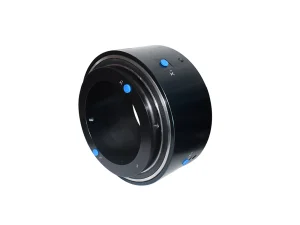
Working process
1. Fluid Inlet
The stationary pipeline is connected to housing. Water, hydraulic oil, air, steam, and other media enter the rotary union through the stationary pipeline.
2. Fluid Flow Through Housing
After entering the housing, the fluid flows along the internal fluid passage. It is transported in the Shaft direction.
3. Fluid Transfer Through the Shaft
The shaft is connected to the rotating equipment. Therefore, the shaft rotates with the equipment. Once the fluid reaches the shaft, it continues to be transported forward through channels inside the shaft.
4. Fluid Reaches the Rotating Equipment
The fluid finally flows into the rotating device through the Shaft’s outlet. This gives the device the medium it needs.
5. Sealing System Prevents Leakage
During operation, the shaft rotates while the housing remains stationary. This relative motion prevents twisting of the stationary pipeline. To prevent fluid leakage, the seal assembly maintains the seal between the housing and shaft. In addition, the spring continuously provides preload to reduce fluid leakage.
Types of Rotary Unions
| Type | Transmission Medium | Pressure | Key Function | Sealing Requirement | Main Purpose |
|---|---|---|---|---|---|
| Pneumatic Rotary Union | Compressed air and other gases | Low to medium pressure | Transfers compressed air between stationary and rotating components | Prevents air leakage during continuous rotation | Maintains continuous gas transmission while allowing rotational movement |
| Hydraulic Rotary Union | Hydraulic oil and other hydraulic fluids | Medium to high pressure | Transfers hydraulic fluid between stationary and rotating components | Provides pressure-resistant sealing during continuous rotation | Maintains continuous hydraulic fluid transmission while allowing rotational movement |
How to Choose a Rotary Union
When choosing rotary unions, you can take the following factors into consideration.
Fluid or Medium
Before choosing a suitable rotary union, first confirm the transmission medium. Different media require different rotary unions. For example, water, hydraulic oil, air, steam, and other fluids.
Working Pressure
It is important to ensure the maximum operating pressure of the system. The rated pressure of the rotary union must meet the actual operating pressure requirements, with an appropriate margin.
Working Temperature
The media and operating environment determine the temperature range. High-temperature applications require the selection of materials and seals suitable for high-temperature environments.
Rotational Speed
Rotational speed affects the design of the sealing assembly, bearing, and rotary union. Therefore, determine the equipment’s maximum rotational speed.
Connection Size and Type
Determine the connection dimensions and connection methods, such as threads and flanges, for the inlet and outlet. You can measure these parameters based on the equipment pipeline to ensure correct installation.
Number of Passages
If there is a need to transmit different media, you need to verify the number of passages. For example, single-passage or multi-passage.
Installation Space
The required equipment space is essential, too. Please confirm that the outer diameter, length, installation direction, and interface position of the Rotary Union meet the space limitations of the equipment.
Seal and Material
You need to select appropriate sealing materials and structures based on the related parameters. For example, medium, pressure, temperature, and rotational speed. In this way, the rotary union you choose can meet specific operating conditions.
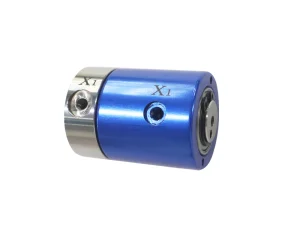
Rotary Union Applications
There is a wide range of rotary union applications.
- CNC Machines: Fluid transport such as coolant and cutting fluid
- Machine Tools: Supplying coolant or lubricating medium to rotating parts
- Printing Machinery: Conveying water, oil or other temperature-controlled media
- Plastic Processing Machines: Cooling and heating of molds or rollers
- Steel and Metal Processing: Transmission of media such as cooling water and hydraulic oil
- Paper Machinery: Roller heating or cooling
- Textile Machinery: Supplying heat or cooling medium to rotating rollers
- Rubber Processing Equipment: Roller heating or cooling
- Packaging Machinery: Fluid transport in rotating components
- Rotary Drums and Rollers: Fluid delivery to rotating drums or rollers
Conclusion
Rotary unions enable continuous fluid transmission between stationary pipelines and rotating equipment. Compared with conventional rotating systems, rotary unions greatly improve the production efficiency of rotating equipment. Besides, they also lower the cost caused by worn tubes. When picking a rotary union, check each parameter to fit the specific conditions.